Hidden fees in Holland Park rubbish collection what to know
Posted on 18/06/2026
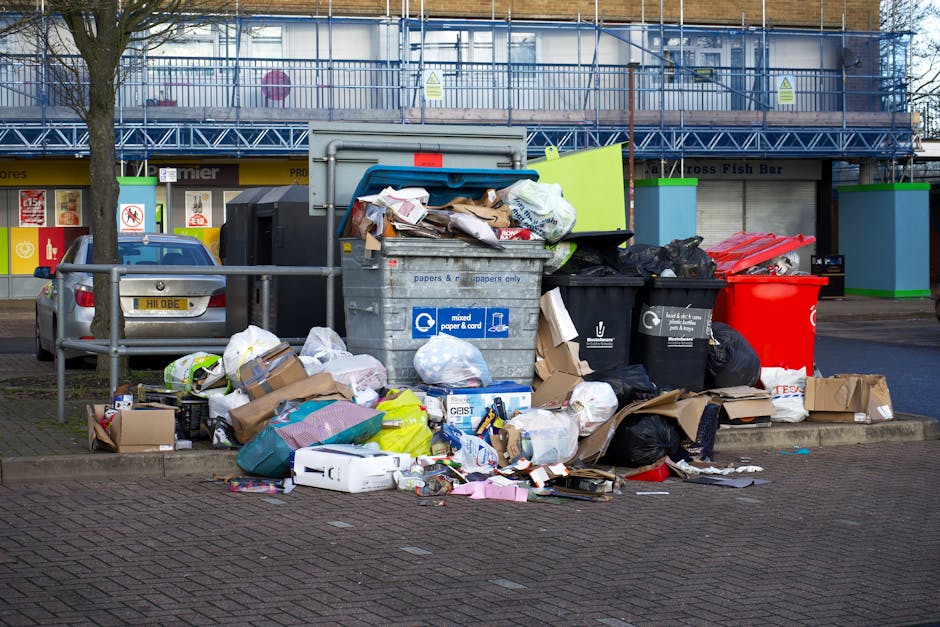
If you have ever booked a rubbish collection and then thought, "Hang on, how did the final bill get bigger than the quote?", you are not alone. Hidden fees in Holland Park rubbish collection what to know is a very real issue for households, landlords, offices, and tradespeople who want fast clearance without nasty surprises. The good news? Most extra charges are avoidable once you know where they come from, how providers calculate them, and which questions to ask before anyone turns up at the kerb with a van.
This guide breaks it down in plain English. You will learn how pricing usually works, which costs are often added later, when those extras are fair, and how to compare providers properly. It is written for real-world decision making, not theory. Because let's face it: nobody wants to be arguing about a mattress surcharge when the hallway is full of old furniture.
Why Hidden fees in Holland Park rubbish collection what to know Matters
Hidden fees are not just a budgeting annoyance. In Holland Park, they can change how you plan a one-off clear-out, a landlord turnover, an office refresh, or a building project tidy-up. A quote that looks competitive at first glance can become expensive once access issues, extra labour, wait time, or waste-type charges are added in.
That matters even more in a neighbourhood where properties often have awkward staircases, basement access, restricted parking, and tighter collection windows. In practical terms, a "cheap" rubbish collection can cost more than a transparent one if the first quote leaves out the details you actually need. The difference is usually not about quality alone. It is about what has been included, what has been assumed, and what gets counted as extra on the day.
One recurring pattern is this: a customer books a clearance based on photos taken in bright daylight, but once the team arrives, the waste is heavier, the access is narrow, and the item count is higher than expected. None of that is unusual. Still, if the pricing was not discussed clearly, the final invoice can feel unfair even when the provider believes it was justified. That is where trust gets lost.
If you are comparing local options, it helps to understand the broader service landscape too. A good starting point is the site's services overview, especially if you are deciding whether you need a simple collection, a specialist disposal job, or a fuller clearance.
Practical takeaway: hidden fees are usually not "mystery charges"; they are often poorly explained extras. The fix is better questioning before booking, not just chasing the lowest headline price.
How Hidden fees in Holland Park rubbish collection what to know Works
Most rubbish collection pricing has a base structure, then a set of possible add-ons. The base quote may cover a vehicle, a labour team, loading time, and disposal up to a certain weight or volume. After that, costs can change depending on what the team finds, how long the job takes, or whether the waste needs special handling.
Here is the part many people miss: the quote may be technically accurate and still incomplete. For example, a provider may quote for "one load," but if your items fill more space than expected, the load category changes. Or the team may assume easy ground-floor access, only to discover a fifth-floor flat with no lift. It is not always a scam. Sometimes it is simply a quote built on assumptions that were never checked.
In Holland Park, practical factors matter a lot. You may have shared entrances, controlled parking, tight mews access, or a property with long internal carrying distances. Even a short job can become more time-intensive if the items sit in a basement, behind a locked gate, or across two floors of stairs. That is why collection companies often ask for photos, item lists, and access notes before confirming a price.
The smartest approach is to ask what the quote includes in plain terms:
- labour time and number of operatives
- vehicle or van size
- loading, lifting, and carrying distance
- parking or waiting constraints
- item type and weight
- disposal or recycling handling fees
- special treatment for restricted materials
For readers who want a clearer sense of how pricing and quote structures are usually presented, the pricing and quotes page is useful background reading.
And yes, the small print matters. Not because providers are all hiding something, but because rubbish clearance has more moving parts than people expect. A sofa is not just a sofa; it is a bulky item, a lifting job, a disposal item, and sometimes a parking problem. Bit of a pain, really.
Key Benefits and Practical Advantages
Transparent rubbish collection pricing saves money, time, and stress. That sounds obvious, but the real benefit is that it helps you make a better decision before the van arrives. When you understand where extra charges come from, you can compare providers fairly rather than guessing from a single headline price.
There are a few concrete advantages:
- Better budget control: you know the likely total before booking.
- Fewer disputes: fewer awkward conversations at the doorstep.
- Faster jobs: the team can turn up with the right equipment and time allowance.
- More suitable service choice: you can tell whether you need furniture disposal, garden waste removal, or a full house clearance.
- Cleaner paperwork: useful for landlords, agents, and business records.
There is also a quality-of-service angle. Providers who explain charges clearly tend to be more organised in other areas too: scheduling, access checks, payment security, and disposal handling. That does not guarantee perfection, of course, but it is a good sign.
For example, if you are clearing a flat after a tenancy ends, a transparent quote helps you avoid the classic last-minute scramble where two extra bags, one broken wardrobe, and an awkward staircase suddenly become a more expensive job than expected. With the right provider, those details are priced in before anyone starts lifting.
If your waste is mainly household items, you may also find the dedicated waste collection in Holland Park service page helpful when comparing the scope of a standard collection versus a larger clearance.
Who This Is For and When It Makes Sense
This topic matters to more people than you might think. The obvious group is homeowners booking a one-off clear-out, but hidden charges can affect almost anyone arranging rubbish removal in Holland Park.
It is especially relevant if you are:
- moving out and need a fast end-of-tenancy clear-up
- selling a property and want clutter removed before viewings
- managing a rental and need a dependable turnaround between tenants
- refreshing an office and clearing desks, chairs, and packaging
- removing garden waste after pruning, landscaping, or seasonal work
- disposing of bulky furniture that will not fit in normal bins
- co-ordinating builders' waste after a refurbishment
For landlords and sellers, timing is often the pressure point. A property can look far better once the rubbish is gone, and in a high-value area that can make a real difference to presentation. If you are in that position, it may be worth reading the related selling real estate in Holland Park guide alongside this article.
For business users, the issue is a little different. Office jobs often involve access constraints, lift bookings, concierge approvals, or out-of-hours work. A quote that misses those details can become expensive in a hurry. The same is true for event prep and post-event clean-down, where timing matters and there is very little room for improvisation.
And sometimes, to be fair, you just want the thing gone today. That is when hidden fees become extra frustrating, because speed is usually the reason people book in the first place. If that is your situation, the site's same-day rubbish removal guidance is worth a look.
Step-by-Step Guidance
Here is a practical way to avoid hidden charges before you confirm a collection. Nothing fancy. Just a clear process that works.
- List exactly what needs removing. Separate furniture, bagged rubbish, garden waste, construction debris, and anything that may need special handling.
- Take honest photos. Wide shots and close-ups help more than polished images. Show stairs, door widths, basements, parking access, and lift availability if relevant.
- Ask what the quote includes. Labour, vehicle size, disposal, waiting time, and access assumptions should all be clear.
- Ask what counts as extra. This is the big one. Find out whether heavy items, mattress disposal, extra bags, mixed waste, or difficult access could change the price.
- Check timing and parking expectations. In central London, a few minutes of delay can affect a booking. Better to ask upfront than argue later.
- Confirm payment terms. Know whether payment is due before, during, or after the job, and whether card payment is accepted securely.
- Keep the quote in writing. Email or message confirmation protects both sides and avoids the dreaded "I thought you meant..." conversation.
A useful habit is to compare quotes on the basis of the job description, not the marketing headline. Two companies may both say "cheap rubbish collection," but one may include loading, staircase carry, and disposal, while the other prices those parts separately. Same phrase, very different reality.
If you are dealing with a more specialist removal, such as dismantling furniture or clearing a room full of old desks, browsing the furniture disposal or office clearance information can help you judge whether the provider is quoting for the right type of job.
Expert Tips for Better Results
After enough clearances, you start seeing the same patterns. The hidden-fee problem usually appears where assumptions are left untested. These tips help you stay ahead of that.
- Describe the job as a scenario, not just a list. For example: "Two sofas from a first-floor flat with no lift, plus eight black bags and two small side tables." That gives a more realistic quote than "some furniture."
- Separate bulky from bagged waste. Bulky items often affect loading time and van space differently.
- Flag awkward access early. Narrow hallways, basement stairs, controlled entry, and shared courtyards all matter.
- Ask about recycling and sorting. A provider with a clear recycling process usually explains charges more transparently too.
- Do not hide items. It sounds obvious, but people do it. Then the quote changes on arrival and everyone is annoyed.
- Use a single point of contact. If you are a landlord or facilities manager, keep pricing questions going through one person so details do not drift.
One very practical trick: if you are unsure whether the job is a standard collection or a more involved clearance, ask the provider to break the price into "base job" and "possible extras." Even a rough split helps you compare offers. It is simple, but it works.
Also, check the provider's wider policies if you are making a significant booking. Pages like payment and security and terms and conditions are useful for understanding how they handle payment, booking expectations, and service boundaries. Not exciting reading, granted, but neither is being charged twice for the same mattress.
Common Mistakes to Avoid
The mistakes here are common because the sales pitch is simple: fast, cheap, hassle-free. Nice words. But rubbish collection is a logistics service, and logistics likes detail.
Watch out for these errors:
- Booking on headline price alone. The lowest number is rarely the best comparison unless the scope is identical.
- Giving vague item descriptions. "A bit of rubbish" is not enough. Not even close.
- Ignoring access issues. Stairs, lifts, and parking can affect labour time and cost.
- Forgetting restricted items. Some waste types need special handling and may not fit standard collection pricing.
- Assuming same-day means same-price. Urgency can affect availability and rates.
- Not checking whether VAT or other charges apply. If a quote seems oddly low, ask what is included.
A small but important one: people often forget to ask whether sorting is required on site. If mixed waste has to be separated before loading, the job takes longer. That is not a hidden fee in the dramatic sense, but it can still change the final amount.
Another mistake is comparing a general rubbish collection with a specialist service. For example, garden clearances and building debris removals have different assumptions. If your job sits in that middle ground, the garden waste removal and builders waste disposal pages can help you understand how service type affects pricing.
Tools, Resources and Recommendations
You do not need fancy software to avoid hidden charges. A smartphone, a notepad, and a good eye for detail are usually enough. Still, a few tools and habits make the process easier.
- Photos and short videos: the simplest way to show volume, access, and item type.
- Measurement tape: useful for bulky furniture, mattresses, and tight door frames.
- A written item list: include quantity and rough size, not just category names.
- Email confirmation: creates a clean record of what was agreed.
- Payment method check: helpful if you prefer card payment or need an itemised receipt.
In Holland Park, location-specific context can also help. Streets around the area vary a lot in access and loading ease, which is why local experience matters. If you want a more neighbourhood-focused view, the guides on the Holland Park neighbourhood, waste collection in W11, and Holland Park Avenue rubbish collection can be a helpful read.
For some readers, the best resource is actually a good quote conversation. Ask the awkward questions. Ask them twice if needed. A reputable provider should not mind, because clarity protects both sides. Truth be told, the provider who answers clearly is usually the one you want anyway.
Law, Compliance, Standards, or Best Practice
This section is about practical UK best practice rather than legal advice. In rubbish collection, compliance matters because waste must be handled, transported, and disposed of responsibly. If a company is vague about how it handles waste, that is a yellow flag. Maybe not an immediate disaster, but enough to slow you down and ask more questions.
Good practice usually includes:
- clear written quotes
- transparent service boundaries
- responsible waste sorting and disposal
- secure payment handling
- appropriate insurance and safety awareness
- proper treatment of any restricted or specialist waste
For customers, the important point is simple: if a provider cannot explain what they will do with your waste, or cannot explain why a charge exists, pause before booking. You do not need to be an expert to spot poor practice. You just need to ask whether the explanation makes sense.
It also helps to choose providers who are upfront about safety, staff handling, and operational boundaries. The site's insurance and safety page is a sensible place to understand the kind of safeguards customers should expect as standard.
And while legal obligations can vary by job type and material, the best rule in everyday use is this: a fair quote should explain the scope, the exclusions, and the triggers for any price change. If those three things are missing, hidden fees are more likely.
Options, Methods, or Comparison Table
When people compare rubbish collection options, they often focus on speed. That is useful, but not enough. The better comparison is based on what is included and how predictable the final price is.
| Option | Typical strengths | Hidden-fee risk | Best for |
|---|---|---|---|
| Fixed quote after clear photos | Predictable total, easier budgeting | Lower if the description is accurate | Households, landlords, planned clear-outs |
| Estimated quote by phone only | Quick to arrange | Medium to high if access or item details are unclear | Simple jobs with straightforward access |
| On-site assessment before loading | More precise once the team sees the waste | Lower, but depends on how the assessment is explained | Complex clearances, mixed waste, awkward access |
| Same-day emergency booking | Fastest turnaround | Higher if urgency is not costed clearly | Urgent removals, last-minute move-outs |
If you are unsure which option suits your situation, think about predictability first and speed second. A same-day slot is useful, yes. But if the final price is a moving target, the convenience can evaporate quickly.
For more context on fast local removals, the Campden Hill Road rubbish clearance guide offers a useful local angle. Different streets, different access patterns, same lesson: details matter.
Case Study or Real-World Example
Here is a realistic example based on the kind of job people regularly book in Holland Park.
A resident in a first-floor flat wanted to clear a worn sofa, a dining table, six chairs, and nine black bags after redecorating. The first quote they received looked appealing because it was low and quick. But it was based on "easy access" and "standard mixed household waste."
When they sent a few better photos, the provider adjusted the quote. Why? The stairwell was narrow, the sofa needed two people to carry safely, and the parking space was not right outside. The revised price was higher, but it was also clearer. No drama on the day. No awkward back-and-forth. The collection took under an hour and the customer knew exactly why the final figure had changed.
That second version is usually the better experience, even if it is not the cheapest headline number. A low quote that becomes a negotiation is expensive in another way: time, stress, and uncertainty.
In our experience, people remember the calm job more than the cheap one. The van leaves, the room looks bigger, and suddenly the whole flat feels lighter. Small thing, but it changes the mood of the day.
Practical Checklist
Use this checklist before you confirm any rubbish collection in Holland Park:
- Have I listed every item or waste type clearly?
- Have I shared photos or a short video of the job?
- Have I explained access, stairs, lifts, and parking?
- Have I asked what the quote includes in writing?
- Have I asked what could count as an extra charge?
- Have I confirmed whether the job is standard, bulky, specialist, or same-day?
- Have I checked the payment method and timing?
- Have I read the relevant service details and terms?
- Have I compared quotes on the same basis?
- Have I kept a written record of the agreement?
If you tick all of those, you are already ahead of most people. Seriously. Most hidden fees happen because one or two of these steps were skipped.
Conclusion
Hidden fees in Holland Park rubbish collection what to know really comes down to one idea: the best quote is the one that matches the real job. Not the optimistic version, not the marketing version, the real one. Once you understand how access, labour, item type, and timing affect price, you can book with far more confidence.
That matters whether you are clearing a flat, refreshing an office, removing garden waste, or trying to get a property ready for sale. Transparent pricing protects your budget, but it also protects your day. Fewer surprises. Less chasing. A smoother job from the start.
If you want a service that feels straightforward, ask direct questions, compare on the same terms, and keep everything in writing. It is a small bit of effort, but it pays off. And in a busy part of London, that bit of clarity is worth its weight in old furniture.
Get a free quote today and see how much you can save.
When the clutter is gone and the room is quiet again, you will be glad you took the time to get the details right.
 Tipper Van - Rubbish Removal and Waste Clearance Prices in Holland Park, W8
 Luton Van - Rubbish Removal and Waste Clearance Prices in Holland Park, W8


